Total Pageviews

Showing posts with label Whelan. Show all posts

Sunday, 14 April 2013

VIOLENCE IN GAMES: TIMELINE TEMPLATE

      After completing the majority of my research (the rest to be carried out tomorrow), highlighting patterns and key aspects of violence in games, I decided to make a start on the timeline that will work in co-operation with the presentation that both me and Andrew are to give on Wednesday the 17th of April.

     The original idea was to present the timeline adopting a 'crime board' theme, as discussed in a previous post of mine. However, whilst attempting to develop that idea on Photoshop, it seemed boring - I guess it sounded better on paper. So I decided to scrap that idea on the most part and blend it with another visual style. Some aspects still remain, such as the pins, the notes and pretty much the whole practical theme, but I blended it with a nice digital layout that I think looks much better.


It doesn't look too flashy small, so open the image in another tab to see it at it's nearly full quality! 

VIOLENCE IN GAMES: TIMELINE TEMPLATE
by Christian Whelan

    I must note, that this is just a template, ready to have the information thrown in there - it is not a finished idea. The idea is to have the concept above, with a little more information in there, and I mean a little. Such information types such as quotes and buzzwords will be added in where necessary, to make the timeline a little more readable, a at the moment, it's just pictures and dates, which is a timeline for sure, but not a very interesting one.

     Although a low resolution when you look at it, the timeline is actually A4 in height and 5 times A4 in width, so it's quiet a lengthy timeline. I may need more space, but me and Andrew will try our best to compile all the information onto this template.

   Anyway, I think Andrew will like it, so once I get approval, we'll compile the research, put it into the timeline, and by tomorrow night, it should be finished along with the research and coupling presentation.

NEXT POST: VIOLENCE IN GAMES: CARMAGEDDON (1997)

Saturday, 13 April 2013

VIOLENCE IN GAMES: VIDEO GAMES TO RESEARCH

     As I gear up to analyzing violence in modern games, I've made a note of what key games I should research. They need to be varied, highlight issues, facilitate conclusions and most importantly, support the evidence and research I've found. However, I do hope that these games offer more questions, as that will only develop my knowledge on the subject and ensure my research is informed and valid. 

  • MANHUNT
  • GRAND THEFT AUTO
  • CALL OF DUTY: MODERN WARFARE 2
  • MORTAL KOMBAT (PAST AND PRESENT)
  • SOLDIER OF FORTUNE 1 / 2
  • KARMAGEDDON

    I hope to draw solid conclusions from these and the previous games that contain violence, but to be honest  I think although I will, it will still mostly be opinions facilitated by research and evidence. Violence in games is a controversial topic that has many sides, but no solid evidence to solidify any argument as the definitive answer.

NEXT POST: VIOLENCE IN GAMES: TIMELINE TEMPLATE

Thursday, 14 March 2013

VIOLENCE IN GAMES: TIMELINE IDEAS

        A key part of this research project is to present and communicate the findings and conclusions through a visually rich timeline. Creativity is one of my great hobbies, especially when Photoshop is concerned, and when you consider the timeline is to be heavy on visual information rather than textual information, a successfully designed timeline is key.

I don't want a linear, everyday timeline. It's too boring considering the topic my research is focused upon. I want it to fit the theme, be creative, be fun, but most importantly, just look cool. So I have a few ideas on how to tackle it - ideas that fir the idea of a visually rich themed timeline.

POLICE CRIME BOARD - I've been watching Dexter recently, and often, episodes feature the stereotypical crime board. Boards where images of suspects, victims and locations are pinned to a white board with minimal information, the sole purpose of such visual material, is to be presented to the detectives and forensics' specialists by those already informed.

Maybe I could use that idea to have a none linear timeline and to ensure the timeline is heavy in visuals. To further reflect the theme of violence (the topic) I could overlay blood spatter, maybe even have buzzwords drawn around the "crime board" in blood smears. This would both help convey the theme to those listening to the presentations whilst helping myself and Andrew to present the information rather than holding cue cards. Plus, it would just look cool.


CRIME BOARD - EXAMPLE

COLOUR SCHEME IDEA

RORSCHACH INK - When I think of crime, I think of violence, then psychology. Considering psychology may have be the driving force for this timeline, maybe there could be some way to present the timeline as a Ink Blot test. I think this is by far the most ambitious and interesting design. But presenting the timeline around this idea may cause issues. Yes, I don't want it to be linear, but I still want a logical order to the information. After all, it is a time "line".


RORSCHACH INK BLOT - EXAMPLE

      So they are my ideas so far, I'm still yet waiting to discuss these ideas with Andrew (my project partner) but I like them, and I'm sure he will too. I'm still thinking of other ideas, but as a starting point, these two ideas are great, as this research project could go two ways, and now, I have a timeline idea for both.

NEXT POST: COMING SOON!

Wednesday, 13 March 2013

VIOLENCE IN GAMES: INITIAL GOALS AND ARTICLES

      It's incredibly hard to find practical, never mind relieble evidence, when researching violence in games to draw an comprehensive and informed conclusion. Violence in Video Games is a topic with great coverage, arguments, speculations and conclusions, but beyond that, evidence seems to wane the deeper you delve into history or culture unless you know specificly what you are searching for.

So as a starting point, I have decided to path out my research. What do I want to know and what do I need to know? These are the questions that will be asked when researching violence in games (not just video games) as a whole. The answers to those questions are below and will form the basis of this assignment.

This is very much a living plan - further research can and may inform the direction of this study.

  • Earliest recording of violence as a sport?
  • Why violence in games before?
  • Notable examples (dating to prehistoric)?
  • Why violence in games now?
  • Notable examples (modenr games and sports)?
  • Why and is violence a pleasure?
  • Why is violence prominant in games?
  • Is there a passive pattern?
  • Conclusion and future?

I believe that by answering these questions, I shall develop a comprehensive but concise journey documenting violence in games through the form of a visually rich timeline.

      Already a few articles show some importance in this research. It is importnat to note, that highlighting violence in games is not the single goal of this research, rather, the goal is to also understanding the reasoning behind violence in games then and now. Artciles found as of yet, may prove to be invaluable when answering the questions above.

9 INSANE SPORTS OF THE ANCIENT WORLD
BLOODSPORTS
THE VIOLENT ORIGIN OF SPORT
WHY DO PEOPLE RESORT TO VIOLENCE?
These articles, along with many others, will be revisited and referenced to draw conclusions for this project. However I will not research alone. Both I and Andrew Shuffleton will work in co-operation to reach the target. Have at look at his blog post below.

NEXT POST: VIOLENCE IN GAMES: TIMELINE IDEAS

ANDREW SHUFFLETONS POST: VIOLENCE IN GAMES

Wednesday, 14 November 2012

HISTORICAL ESSAY SKELETON PLAN

THE INTRODUCTION - Acting a set up for the rest of the essay, the introduction will lightly touch on the subjects that will be detailed and researched throughout the essay.
  • Introduce the art movement
  • Define what it symbolise
  • Mention key designer

THE HISTORY OF ART DECO – This entire section will follow the journey of Art Deco from its early beginnings in 1900 to its peak resurgence in the 1940 due to countless international exhibitions. Where did it come from? What was it and what did it intend to do? Why did it lose popularity? How did it rise again? These are the questions that will be answered in this section.

1.       Origination in 1900 from sudden surge of technological progress
2.       Departure from Art Nouveau and other styles – modernism, cubism; what are they?.
3.       Looking back at all past art styles to build a future
4.       Its aim to streamline form to fit function. Examples and support for this.
5.       The forms of art it resonated within – glass, automobiles, furniture, architecture?
6.       The Universal Exposition of 1900 and what it did
7.       The Society of decorative artists was formed because by people who attended it
8.       Exposition Internationale des Arts Decoratifs et Industriels Modernes
9.       Its popularity between the two world wars after the third republic
10.     Its extensive use in the 1930 for architecture, cars, railway etc
11.     It’s focus on the elite – image glamour.
12.     It’s fading during World War 2 due to bias towards the elite.

Eva Weber, E. W. (2003) Art Deco.  JG Press.
Carolyn Mcdowall, C. M. (2010) What is Art Deco? http://www.youtube.com/watch?v=amVvYPU4Gw8


KEY DESIGNERS OF ART DECO – After discussing the history of Art Deco and its journey until its wane in the great depression this entire section will be dedicated to answering the questions; what is the society? What did it do for Art Deco? Who was involved in it? What did they do? What was their influence the movement?

1.       How “The Society of decorative artists” developed and influenced Art Deco
2.       Founders of the “The Society of decorative artists”
3.       Hector Guimard – his work, his influences.
4.       Eugene Grasset -his work, his influences.
5.       Raoul Lachenal - his work, his influences.
6.       Their intention the demonstrate the evolution of French decorative arts
7.       The societies wade in the great depression.

Hector Guimard (2010) http://www.hector-guimard.com/
Eugene Samuel Grasset (2010) http://www.eugene-grasset.com/
Goss. J (2010) French Art Deco. http://www.metmuseum.org/toah/hd/f


THE CULTURAL IDENTITY OF ART DECO – Now that the history of Art Deco and those who made it the icon it is today have been discussed. I will now lead onto how the movement became globally identified both nationally and internationally.

1.       Extravagant, romantic designs – Examples to support
2.       Its identity
3.       Its common attributes
4.       Its bias towards the elite

Victoria and Albert Museum (2008) Art Deco around the world  
Eva Weber, E. W. (2003) Art Deco.  JG Press.


THE INSPIRATIONS OF ART DECO – Now that art Deco has been defined as a movement with its key designers and explained as a part of culture, this section will discuss its first influences, its on-going influences and what it influenced.

1.       Considers everything that preceded it – discuss similar movements
2.       Art Nouveau Forerunner – Its Main Inspiration, comparison and differences
3.       Infusing jaded traditions to bring new life
4.       On-Going Cultural Influences - Babylon, Ancient Egypt, Aztec Mexico and Africa
5.       The Avant Garde – its new visual language and it's inspirations
6.       How it inspires other movements

Eva Weber, E. W. (2003) Art Deco.  JG Press.
Carolyn Mcdowall, C. M. (2010) What is Art Deco?  
Victoria and Albert Museum (2008) Art Deco: Design Influences 


ART DECO TODAY – Now that the history of Art Deco has been covered, its influences, those responsible for its resurgence and its identity, the essay had led to the modern day. The only aspects of Art Deco’s journey left to discuss is where Art Deco lies today.

1.       Societies that help retain the movement.
2.       Examples that still stand today
3.       Influences on Modern Architecture
4.       Resurgence of interest with interior design
5.       Personal example – the cinema

Olsen. D. (2009) Retro Is Back – Art Deco Today  
Art Deco Society of Boston (2010) About Art Deco  


CONCLUSION – By the end of the essay, the history of art deco, its key designers, influences, cultural identity and where it is today has been discussed. Pretty much the entire story and journey of Art Deco has been told. Here I will summarise the points and give my own opinion on the movement.
  • The global effect it has today
  • Opinion on movement
  • Conclusive statement


NEXT POST: ART DECO ESSAY (DRAFT ONE)

Tuesday, 30 October 2012

ART DECO: HISTORICAL DESIGN ESSAY PLAN

WHY HAVE I CHOSEN THIS TOPIC?

        As a lover of art that can be appreciated at face value, Art Deco is a movement that, although abstract in its design, appeals to me through its elegant and aesthetically pleasing visuals. It's the type of art style that I would personally adopt if I was an architect or artist. And through research even though I have a personal preference for Realism, I have begun to realise the actual extent such a movement has influenced countries around the world. This is a conclusion that has not manifested from research alone, but with added personal experience. It’s a topic I have most enjoyed studying whilst also finding its aesthetic qualities and origins deeply fascinating. Thus, the topic I have chosen for the upcoming historical design essay is the Art Deco design movement.

    This is entirely down to a lecture rich with information covering its incredible influence and journey from the late 20’s. Whether discussing key designer and founders such as Hector Guimard or Raoul Lachenal or researching its cultural impact and bias toward to elite, its rise, fall and eventual resurgence defines a generation and in doing so, has developed an indistinguishable character that cannot be understated. It is this incredible journey, culture and identifiable aesthetics are what appeal to me and prompt me to delve deeper into its history and influences.

KEY RESEARCH AREAS AND MATERIALS

  In preparation for this assignment, I have gathered a variety of valuable and legitimate research sources to broaden my understanding of the Art Deco design movement. These sources cover areas such as;
  • The History of Art Deco
  • The Key Designers of Art Deco
  • The Cultural Identity of Art Deco
  • The Inspiration of Art Deco
  • Art Deco in Today’s Society
   With these topic areas in mind, I believe I can cover the entirety of the Art Deco movement, from where it came from, who influenced its cultural progression, to where it was and where it is now. With this comprehensive list of areas, I have managed to gather resources from various source types such as book, documentaries, online article and images. Key resources that deserve mentioning are;

1.    Eva Weber, E. W. (2003) Art Deco.  JG Press. Link.
2.    BBC (2009) Glamour’s Golden Age. Link.
3.    BBC (2007) Art Deco (c. 1908 to 1935). Link.

NEXT POST: HISTORICAL ESSAY SKELETON PLAN


Saturday, 20 October 2012

ART MOVEMENT: ART DECO

     Art Deco is a heavily influenced movement that, unlike most movements, wasn't a political response to the great war of the 30's. In fact, Art Deco existed long before the war under a different identity - the 'Modern Style'. As a result of the harsh cultural conditions during World War II, it lost it's popularity due to it's bias towards the rich. It was only until the late 60's (Post World War II) that Art Deco experienced a resurgence and flourished in the 60's, where it's name "Art Deco" was coined in 1966 after an exhibition in Paris and it's first book by Bevis Hillier in 1968 was released. Since then it has gone on to globally influence all areas of design, such as Architecture, Interior Design and Film - its most famous example in the UK is the Midlands Hotel in Morecombe (seen below).


Art Deco Example

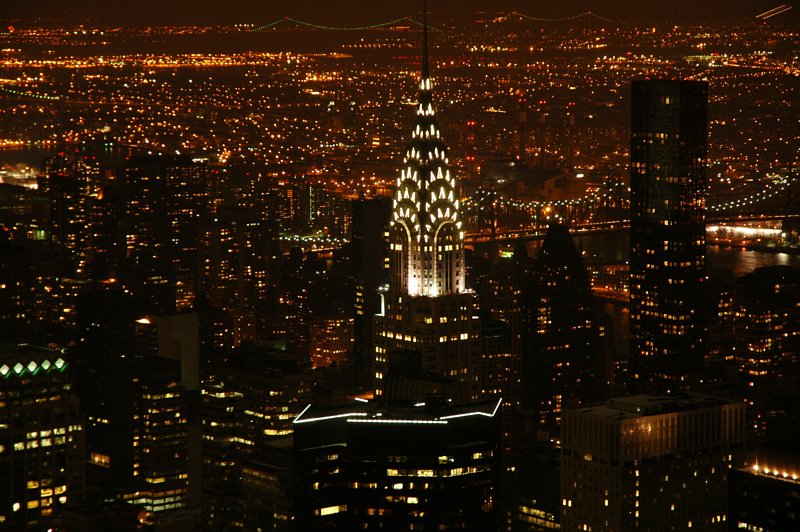
  Famous for it's mathematical and elegant geometric shapes, Art Deco became heavily influenced over the early 20th century by various different ancient cultures, such as the art of Babylon, Ancient Egypt, Aztec Mexico and Africa. From this culmination of cultural influences manifested the common household image of Art Deco and without realising it, we as a modern society are exposed to it's massive influence to this day. In the UK you have the Midlands Hotel in Morecombe inspired by the geometrical focus Art Deco adopts and in the US you have the Chrylser Building (Shown below) that was inspired by the trademark Sunburst Motif (seen below) and the Golden Gate Bridge that focuses on mathematical shapes to facilitate function (also seen below).

Art Deco Example

Art Deco Example

Art Deco Example

    As a lover of art that can be appreciated at face value, Art Deco is a movement that, although abstract in it's design, appeals to me through it's elegant and aesthetically pleasing visuals. It's the type of art style that I would personally adopt if I was an architect or artist and through research, I have begun to realise the actual extent such a movement has influenced countries around the world. This is a realisation not spawning just from research,  but from personal experience. After being told that Cinemas are probably the best example of Art Deco's influence on interior design I was dumbfound as to exactly how this was the case, until I went to the cinema and took the picture below;

Art Deco Example

   Instantly you can see the Sunburst Motif created by the use of light and shadow - in this case it is actually used to present light rather than to represent an ideology or symbol like the Chrysler Building succeeded in doing with it's sunburn motif peak as if to say "Look at this, look at what our country has accomplished". This Cineworld in Didsbury, like many others around the country, simply used it for effect - understandable considering its magnificent effect. 

    All in all, Art Deco's influence has been felt globally, and through the images above it's clear its legacy has been solidified. However, although used in many forms of art, 'art' itself is the best example of what Art Deco represents.

Art Deco Example

Art Deco Example

Art Deco Example

Art Deco Example

NEXT POST: ART DECO: HISTORICAL DESIGN ESSAY PLAN


Wednesday, 17 October 2012

MOOD BOARD: REALISM

       Realism was a movement that I related well to, therefore developing a mood board with this movement in question was the obvious avenue to take. However I soon realised that Realism lacks the same depth and cultural inspiration other movements such as Art Nouveau pride themselves upon - its a movement that can be taken at face value, and thus, although I like the resulting body's of work that that have emerged from such a well known movement, I find myself craving more character or depth due to previous research on other movements. 

   Taking this into account, the mood board I have developed encompasses exactly what Realism is about - "What you see is exactly what you get". It's about the images themselves and therefore, the mood board below focuses on that in the hopes of translating the concept, the art and its style across - it's not about the fancy techniques, its about the image as a whole, I kept this in mind when developing the mood board.


   All in all, considering this mood board is no where near as rich in its visuals, it is still a successful piece, as it reflects and succeeds in the same goals as Realism sets out to accomplish  - its realistic, its serious and its straight forward. Couple the imagery with the direct quotation that encompasses what Realism aims to achieve and you have a mood board that is instantly identifiable with the movement Realism and thus, a successful mood board. One thing I must note though, is that after developing both mood boards, my interest in art has taken a U-turn as I find myself more attracted to work with depth and cultural influences - I now appreciate the values of a piece of art rather than art at face value.

NEXT POST: ART MOVEMENT: ART DECO

MOOD BOARD: ART NOUVEAU

        Art Nouveau is something I'd heard of prior to this course, but never really understood. Since developing this mood board however, I have a new found interest in it. The colours combined with the circular shapes and patterns make art that is both pleasing to the eye whilst also being culturally influenced. It's a rich style that really has its own identity and thus, its a field I shall research further into in the coming months. All in all I am really pleased with the mood board below.


   With a movement like Art Nouveau, there are many defining characteristics; whether colours or shape, Art Nouveau has distinctive trademarks such as the use of circles, thick controlled lines and warm colours. In this mood board I tried to reflect all of the aforementioned in the hopes of translating the Art Nouveau theme - I personally think I succeeded. By using common shapes (Circles etc), thick black lines and curved patterns, I have managed to develop a full body of work that encompasses the art movement as a whole and therefore I believe it is an informative piece to those that view it. It's a movement that 'requires' such depth in order to be appreciated and thus, by included common patterns, colours, techniques and renowned artworks within the Art Nouveau movement, this mood board perfectly reflects the style.


NEXT POST: MOOD BOARD: REALISM

Wednesday, 10 October 2012

ART MOVEMENT: CUBISM

      Cubism is and was one of the most incredibly influential art forms, especially in the early 20th century. It was founded by Pablo Picasso – the pioneer of Cubism. More often than not, you will find his name is mentioned when cubism is in question and rightfully so, he created it, he made its benchmark pieces. Cubism defied the norm; it rejected the idea that art should copy nature with traditional and realistic techniques such as perspective and flipped it on its head for affect. Personally I dislike the movement, as I have a personal preference for realism; I simply believe the movement is different simply because it can be. Below is a prime example as to why I dislike Cubism. The “Weeping Woman” by Picasso was painted in 1937 in response to the bombing of a Basque town of Guernica and although I appreciate it, I do not understand it. Why skew an idea to present a realistic one? To me nothing is more effective than reality.
 
 
   However I can see why others would follow such a movement, although abstract in its presentation. Cubism is also a form of symbolism, presenting an idea and an emotion directly rather than subtly. It's an art form that can only be appreciate when put into context; considering the Weeping Woman, you can see how the sad story of a mother holding her dead child is effective when you take a second look at the above piece.

NEXT POST: ART MOVEMENT: REALISM

Tuesday, 9 October 2012

INTRODUCTION TO BLOG


        Historical Contextual Studies was not something I would have thought to be of any importance to Game Design. However after some initial scepticism, I have been enlightened to exactly how important research on other art forms are, whether symbolism, music or architecture. It just goes to show how much research and effort really is invested when building a game and its world. Because of this, I’m craving the opportunity to soak up knowledge so that when the opportunity presents itself, I can confidently build a world with substance along with imagination or realism.

   With this module, you get as much as you put into it, thus throughout the year you will mostly see self initiated research on various topics from symbolism to architecture. You will see my research and read my views, and hopefully when read in correspondence with the other module blogs, see how my research affects my work and eventually matures it.

   To abide by such a promise, my first posts will cover three separate art movements, what they are and my personal views on them.

NEXT POST: ART MOVEMENT: CUBISM